SMART-AI: Learning Activities to Applied Practice
SMART-AI project outcomes are not measured only by activities completed, but by what changes in practice, understanding, and confidence. Through international mobility (Belgrade, Serbia & Ulm, Germany), hands-on learning, and structured reflection, new digital and AI-related skills are developed in real working contexts. Participants involved in activities in Germany and Serbia actively apply the acquired knowledge in their daily professional practice. This application takes place both in their workplaces and through workshops and dissemination events organised after the mobilities.
- Learning outcomes extend beyond individual participants through internal workshops and dissemination activities.
- Knowledge is shared, adapted, and reused within organisations and local communities.
- The project strengthens the connection between learning and real-world application.
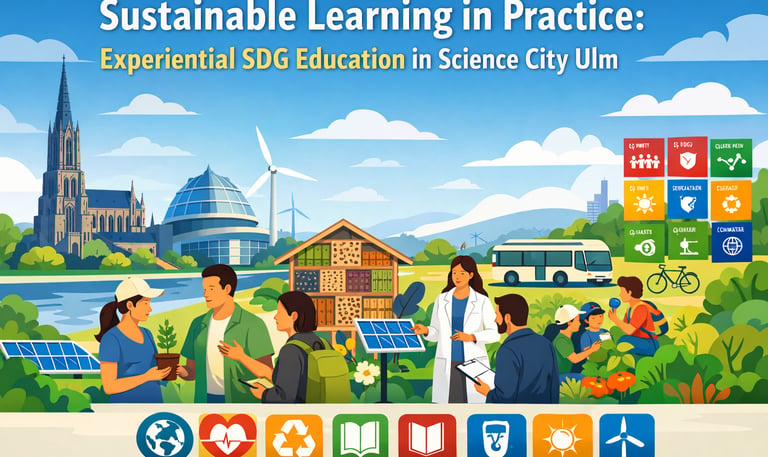
- New approaches to digital transformation and sustainability are explored in a concrete and accessible way.
- Participants improve their ability to navigate change, adapt to new technologies, and make informed decision
- International cooperation supports mutual learning and the exchange of diverse perspectives.
- The outcomes contribute to more inclusive access to skills development, especially for adults facing barriers to learning.
- Learning materials, insights, and experiences remain available beyond the project duration.
What remains is not only acquired knowledge, but increased readiness to act, collaborate, and continue learning in a changing professional landscape.Empowering skills for growth.
SMART-AI: Open Educational Resources
Over the recent project period, a series of international education and mobility initiatives were implemented, focusing on digital skills, artificial intelligence, sustainability, and adult learning.
During these projects, multiple Open Educational Resources (OERs) were created, including applied learning guides, instructional toolkits, and visual resources supporting educators and learners.
Job-shadowing mobilities and international events enabled participants to observe, test, and transfer real-world practices into their professional environments.
The projects resulted in practical learning materials, transferable methods, and dissemination activities that extended learning beyond direct participants.
These outcomes remain available for reuse, adaptation, and further development, supporting long-term impact and continued learning beyond the project lifecycle.
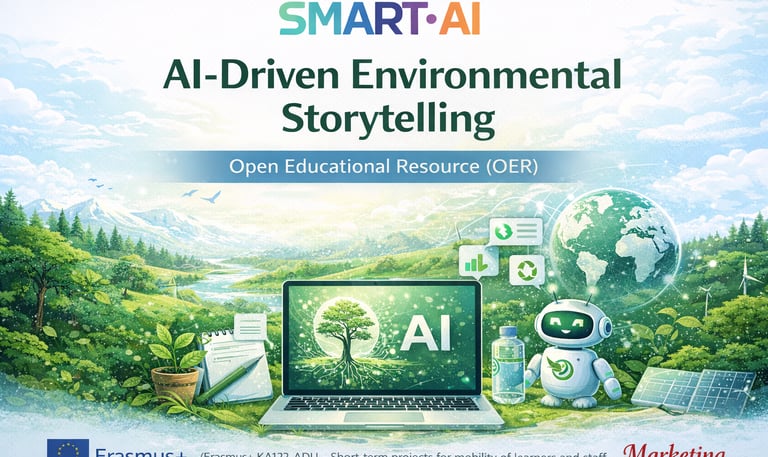
This OER was developed within the project SMART-AI and is based on learning experiences gained during job-shadowing mobility in Belgrade. It explores how artificial intelligence can support environmental storytelling in adult education through practical, learner-centred approaches. The resource combines theoretical foundations, hands-on activities, visual walkthroughs and reflective exercises. It is designed for adult educators, trainers and facilitators who wish to integrate AI tools into sustainability-focused learning contexts.
The content supports the development of digital competences, environmental awareness and responsible use of AI.
All materials are provided as open, reusable learning resources intended for adaptation across different educational and community settings.
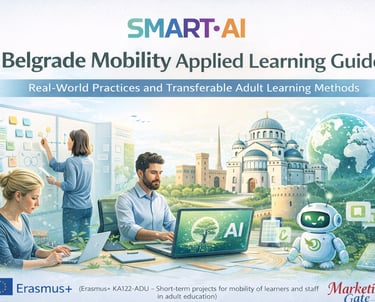
Learning becomes most meaningful when observation leads to reflection and practical application.
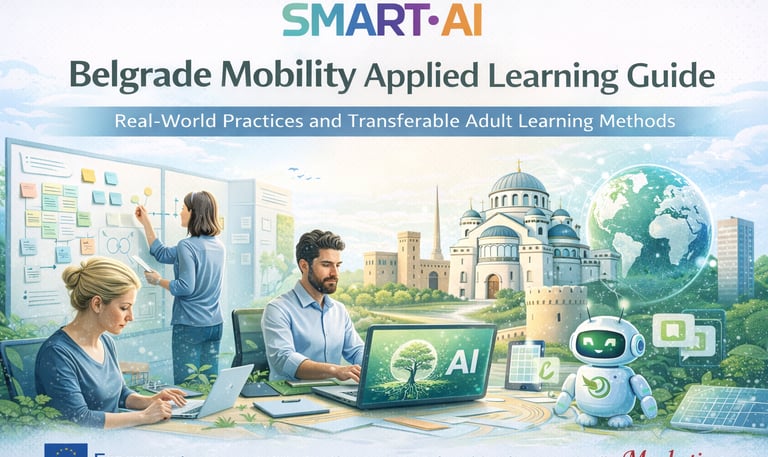
This OER documents applied learning from the SMART-AI job-shadowing mobility in Belgrade, focusing on real teaching environments and adult-learning practices observed at BAPUSS. It illustrates how adult education is delivered in practice through structured facilitation, applied tasks, digital tools and learner-centred approaches.
The guide translates mobility experiences into transferable methods adaptable to different adult education contexts.
Special attention is given to competence-based learning, experiential activities and the practical use of digital and AI-supported tools.
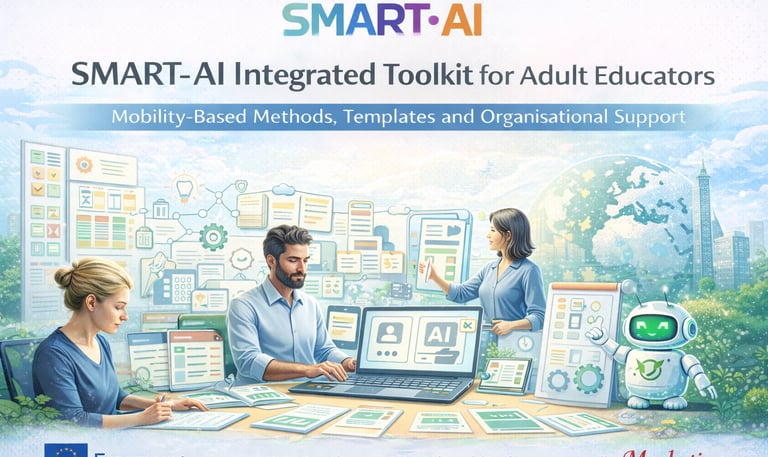
This Open Educational Resource (OER) consolidates learning from international mobility into a structured toolkit for adult educators and training organisations.
It transforms job-shadowing observations into practical methods, learning cycles, and ready-to-use templates that support preparation, implementation, and follow-up of mobility activities.
The toolkit focuses on applied adult learning, AI-supported practices, and competence-based approaches that can be directly integrated into everyday educational work.
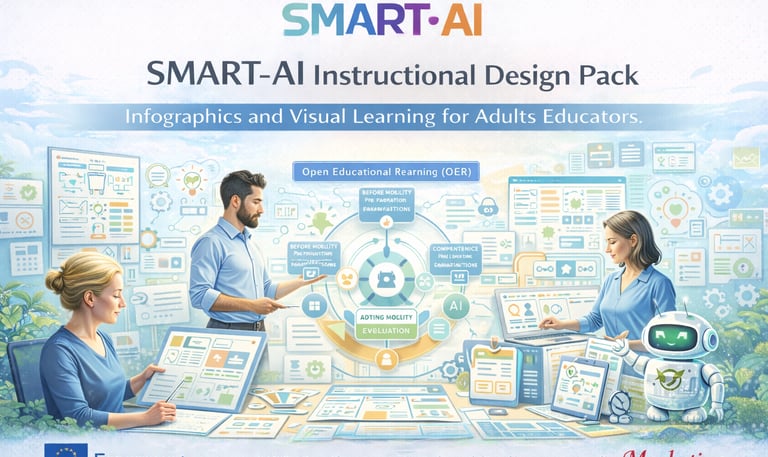
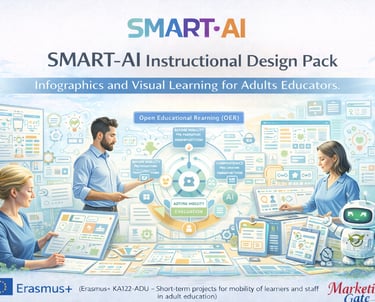
This Open Educational Resource (OER) focuses on visual and instructional design as a core method in adult education.
It translates learning outcomes from the SMART-AI job-shadowing mobility in Belgrade into infographics, visual learning cycles, layouts, and educator templates.
The resource supports adult educators in planning, delivering, and evaluating learning activities through clear visual structures and AI-supported methods.
Designed for direct use, the OER strengthens consistency, accessibility, and inclusion in mobility-based and everyday adult learning contexts.
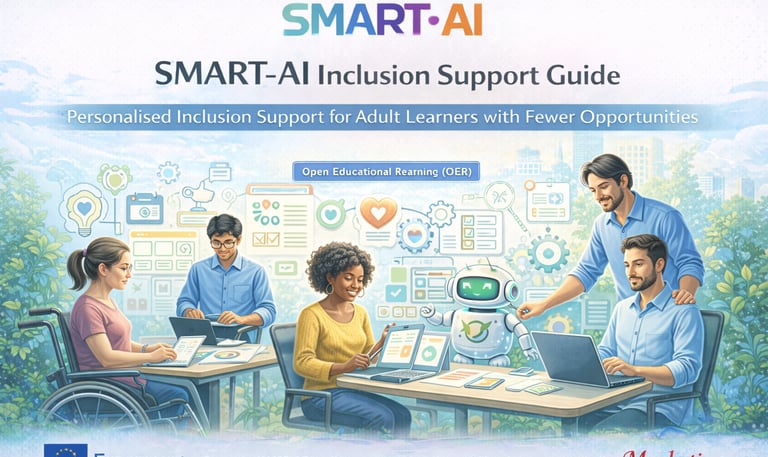
This OER provides structured inclusion support for adult learners with fewer opportunities participating in international mobility activities.
It translates real experiences from the SMART-AI job-shadowing mobility in Belgrade into personalised support measures, reflective tools, and AI-assisted learning pathways.
The resource addresses economic, digital, social, educational and health-related barriers through a clear before → during → after mobility framework.
Designed for adult educators and organisations, the OER strengthens inclusive practice, learner wellbeing, and equal access to meaningful learning opportunities.
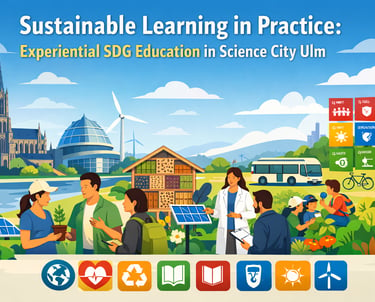
This OER provides structured inclusion support for adult learners with fewer opportunities participating in international mobility activities.
It translates real experiences from the SMART-AI job-shadowing mobility in Belgrade into personalised support measures, reflective tools, and AI-assisted learning pathways.
The resource addresses economic, digital, social, educational and health-related barriers through a clear before → during → after mobility framework.
Designed for adult educators and organisations, the OER strengthens inclusive practice, learner wellbeing, and equal access to meaningful learning opportunities.
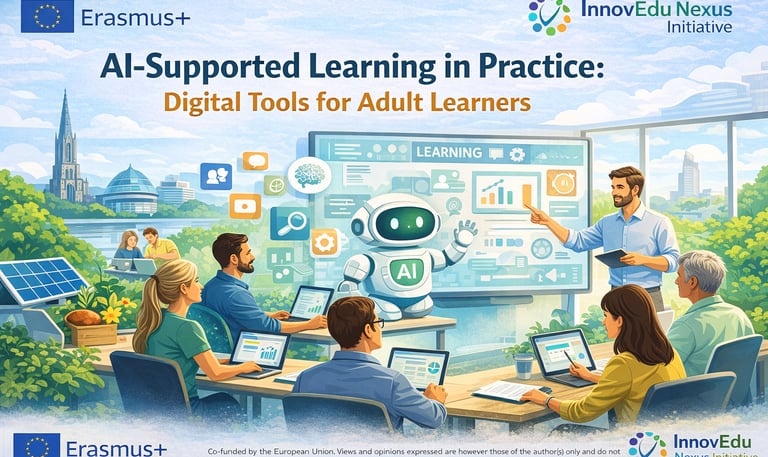
This resource explores the practical integration of artificial intelligence and digital tools in adult education, focusing on real-life applications that enhance the learning experience. It demonstrates how AI-driven solutions can support personalized learning pathways, improve engagement, and strengthen key digital competences required in today’s rapidly evolving environment. The OER provides concrete examples and tools that empower both learners and educators to adopt innovative approaches, supporting lifelong learning and digital transformation in line with European priorities.
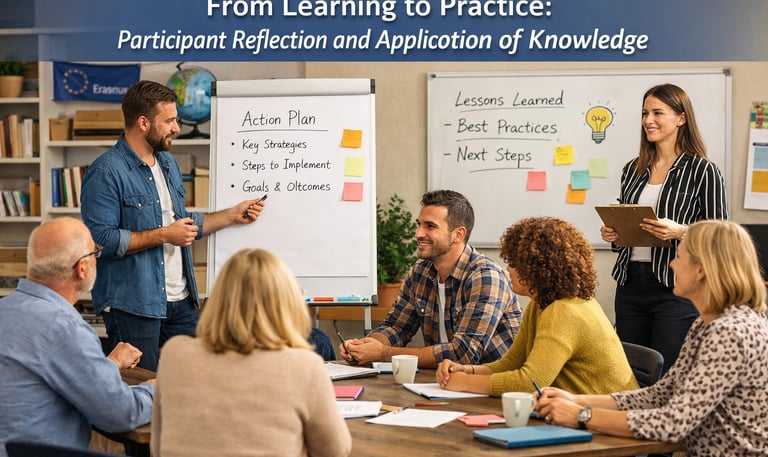
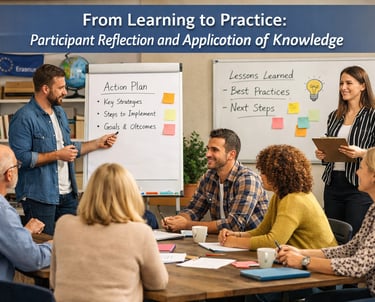
This OER captures participants’ reflections throughout the mobility experience and illustrates how acquired knowledge, skills, and competences are transferred into real-life and professional contexts. It highlights the importance of reflective learning as a tool for deeper understanding, personal growth, and long-term impact. By showcasing concrete examples of application, the resource demonstrates how mobility-based learning contributes to improved employability, active citizenship, and continuous lifelong learning.
Reviews
Hear from our satisfied participants.
The training in Ulm was transformative for my career!
Jovan


Ulm
Job shadowing in Belgrade opened new doors for me.


Marina
Belgrade
★★★★★
★★★★★
Contact
Get in touch
Follow
Connect
marketingporta@gmail.com
+38977745056


Funded by the European Union. Views and opinions expressed are however those of the author(s) only and do not necessarily reflect those of the European Union or the European Education and Culture Executive Agency (EACEA). Neither the European Union nor EACEA can be held responsible for them.
© 2026. All rights reserved.